AI Strategic Plan for Home Healthcare Provider
Overview
A multi-location home healthcare services organization engaged New Clarity to evaluate how AI could reduce operational friction, improve visibility, and support long-term scale.
The company has grown rapidly across multiple business lines and locations, but operational systems, data infrastructure, and reporting processes had not kept pace with that growth. Leadership wanted a clear understanding of where AI could provide measurable value and how to sequence those investments.
New Clarity worked closely with the organization to assess current workflows, identify high-impact opportunities, and design a phased roadmap.
The Challenge
The company manages a large number of clients, employees, and franchise locations, but day-to-day operations were constrained by manual processes, fragmented data, and limited reporting capability.
Several recurring challenges were identified, including:
- Difficulty consolidating data across CRM, financial, and operational systems
- Time-intensive month-end reporting and reconciliations
- Limited visibility into franchise-level performance trends
- High volumes of manual coordination across intake, scheduling, billing, and HR
- Customer service workloads that scaled linearly with growth
- Marketing and lead-generation activity that lacked structured measurement
The organization had reached a point where additional growth required structural changes to how data, workflows, and customer interactions were managed.
The AI Strategy
New Clarity developed a strategic roadmap focused on the highest-leverage opportunities. The plan emphasized early operational wins and laid the groundwork for broader AI capabilities over time.
1. Customer Support Automation
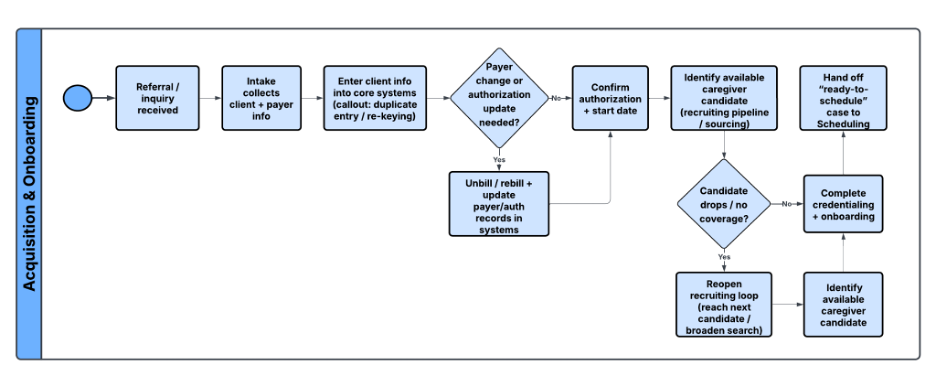
An AI-powered support system was proposed to handle routine client inquiries, schedule changes, billing questions, and basic care coordination. This system would reduce response times, lower call volume, and free staff to focus on complex situations requiring human judgment.
2. Operational Reporting and Insights
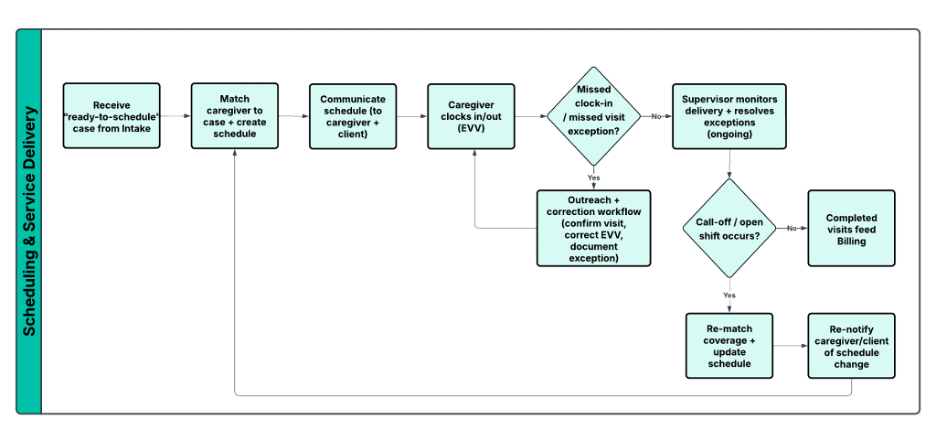
A unified reporting environment was recommended, supported by AI-driven data extraction and summarization. This would consolidate information from multiple systems and provide both leadership and franchise owners with clear visibility into performance.
3. Intake and Lead Management Optimization
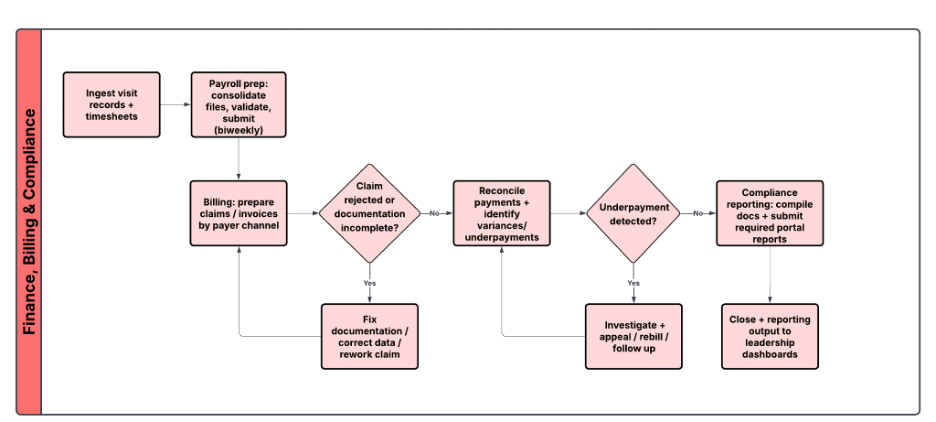
AI tools were proposed to streamline lead intake, qualify inquiries, and ensure faster response to prospective clients. This would improve conversion and reduce manual effort across intake teams.
4. HR and Workforce Coordination
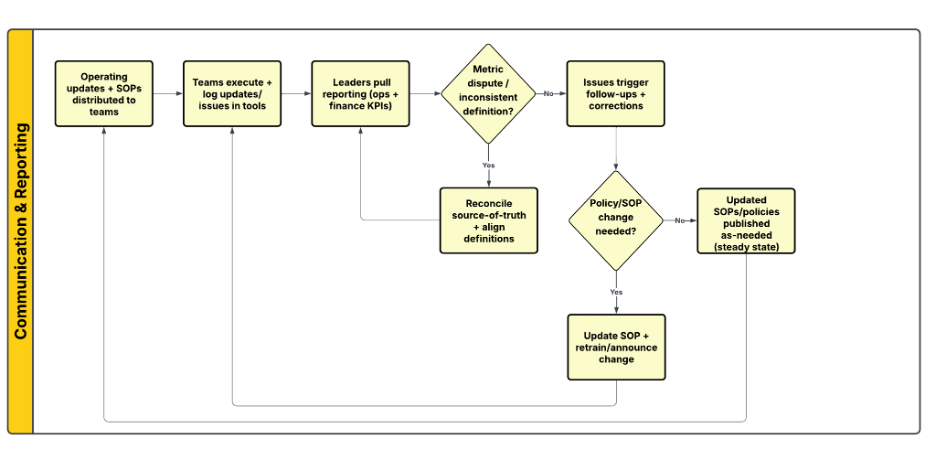
The roadmap included AI assistance for caregiver scheduling, credentialing reminders, and HR documentation. These workflows are highly manual and ideal for automation.
5. Internal Knowledge Hub
An AI-powered knowledge base was proposed to centralize policies, procedures, training materials, and operational guidance. This would improve consistency across locations and accelerate onboarding.
6. Franchise Performance Monitoring
An AI-driven analytics layer was recommended to identify trends, anomalies, and opportunities across franchise locations. This would help leadership coach owners and prioritize support more effectively.
Roadmap and Prioritization
New Clarity built a phased roadmap that prioritized initiatives based on operational impact, implementation complexity, and strategic value.
Phase 1: Operational Foundations
Customer support automation
Internal knowledge hub
Phase 2: Visibility and Performance
Operational reporting and insights
Franchise performance monitoring
Phase 3: Workflow Optimization
Intake and lead management
HR and workforce coordination
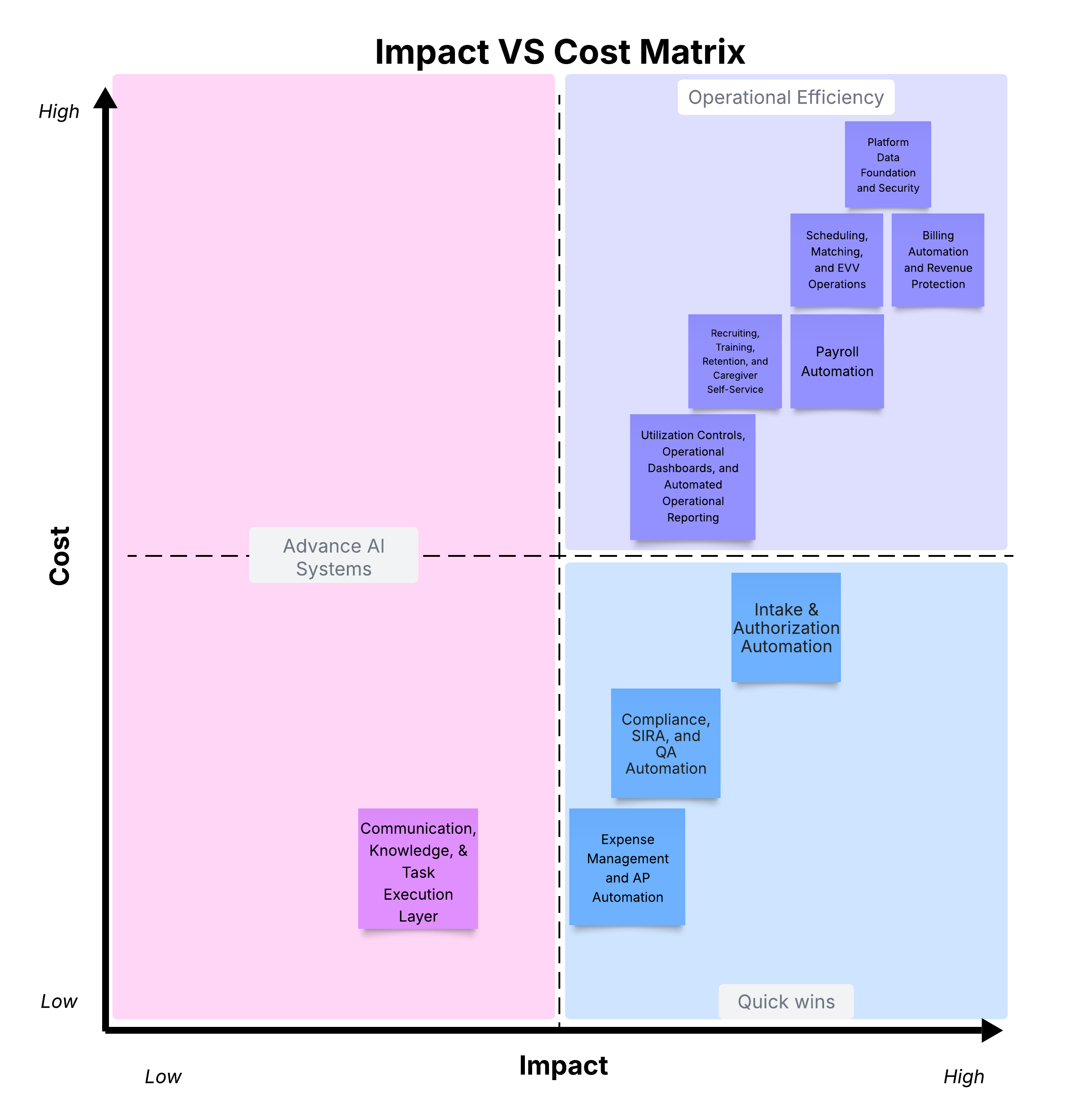
This sequencing prioritizes early efficiency gains, then expands into broader visibility and operational improvement.
Expected Impact
The roadmap was designed to produce clear, measurable improvements across operations, finance, customer service, and franchise performance.
Expected outcomes include:
- Faster, more consistent customer service responses
- Reduced manual workload across intake, billing, and HR
- Improved month-end reporting and financial visibility
- Stronger franchise oversight and performance management
- Better coordination between corporate and franchise locations
- A scalable foundation for continued growth without proportional increases in headcount
The strategic plan provided the organization with a clear path to integrate AI in a structured, prioritized way that supports both immediate efficiency gains and long-term operational maturity.